Celestial Mechanics for the Uninitiated
Author: Animesh Pradhan
Kicking off a new semester filled with exciting sessions, we started with the first talk on a series to explain Astrophysics to beginners and challenge the enthusiasts as well.
Have you ever wondered how we know that we are safe from any asteroid impact for atleast a decade? Or how did we figure out that Oumuamua was an interstellar object?
The answers to these questions lie in the elementary but surprisingly involved and beautiful theory of Celestial Mechanics.
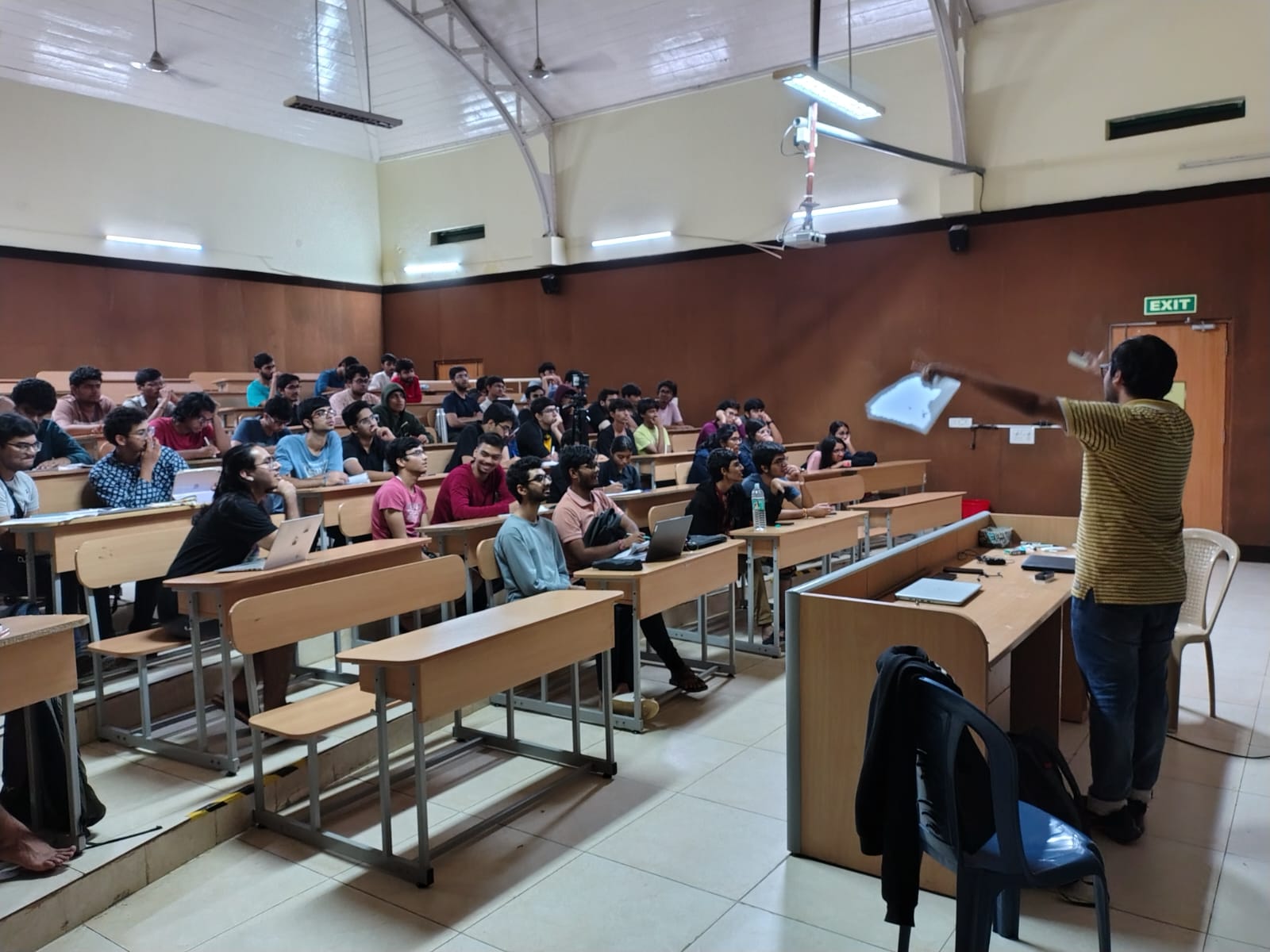
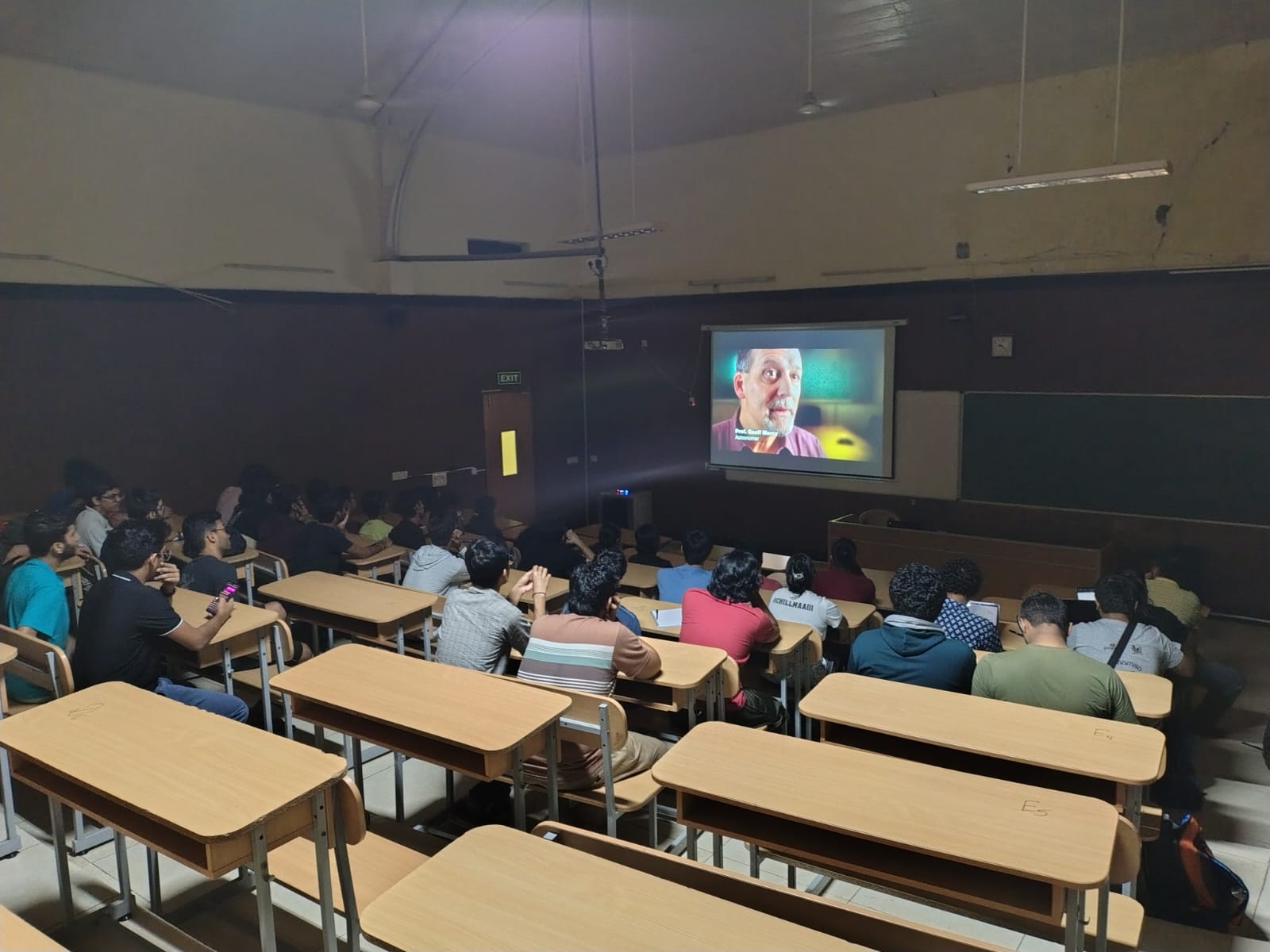
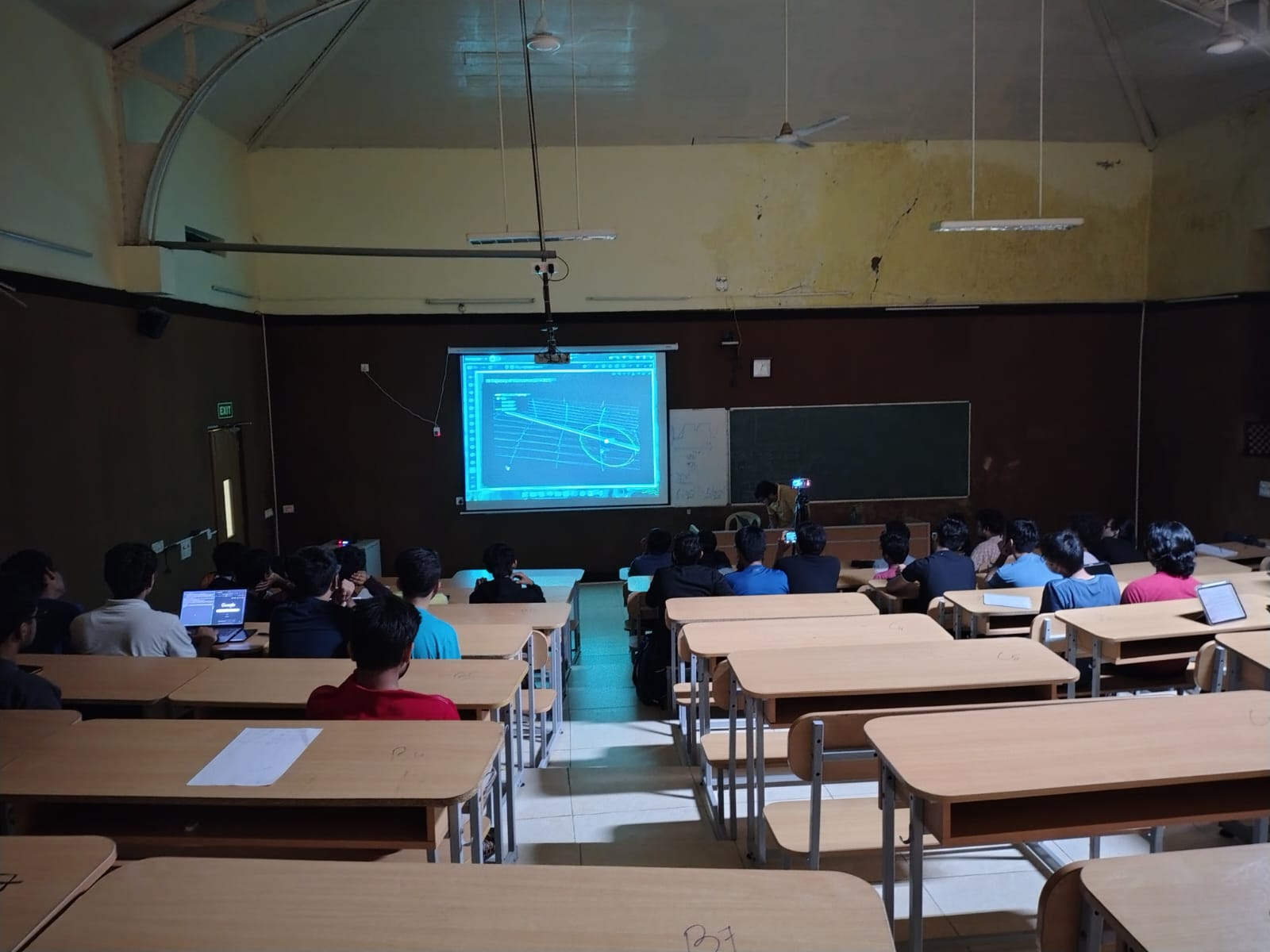
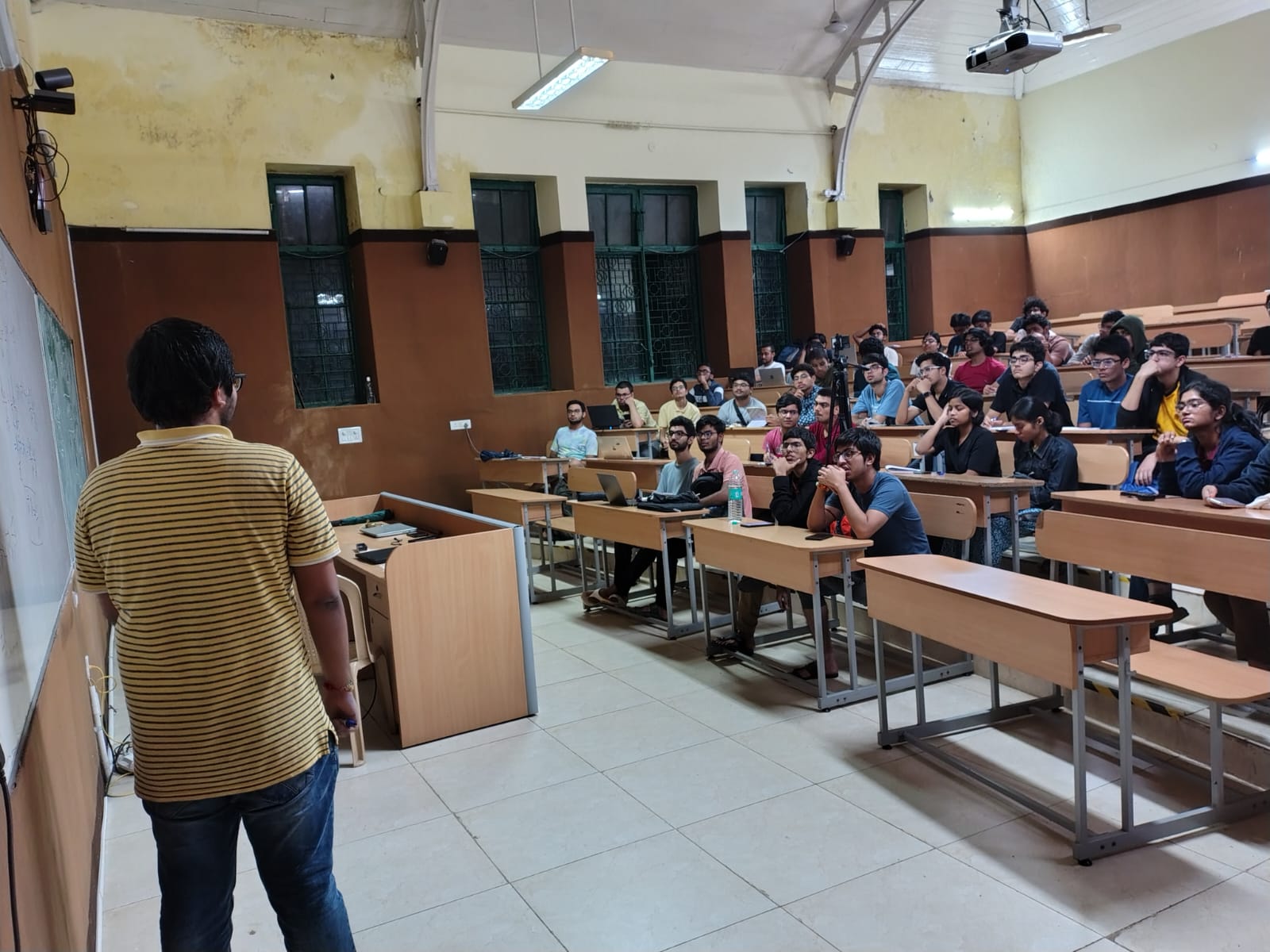
The talk began with a screening of the documentary of “How the Universe Works”, followed by a detailed dive into the mathematics of Celestial Mechanics, building from the basic foundations laid by Kepler. Instead of solving the equations of planetary motion via the standard rotational pseudo-potential method, we analyzed the differential equation itself in detail, building a solution from the ground up via the constants of motion. Using the beautiful concept of the eccentricity vector(also called the LRL vector), we found the trajectories of motion both in the regular coordinate frame as well as a beautiful result in the phase space. We then tried to analyse the solutions for the three-body problem and the multi-body problem, leading to discussion on the famous Lagrange points and the Virial Theorem. Finally we discussed the various types of binary systems and the methods to estimate their masses as well as orbital parameters. The talk ended on a exciting note, as we simulated the trajectory of Oumuamau, wondering about the consequences of the various hypotheses explaining its puzzling, extra-gravitational acceleration. The lecture notes of the talk have been attached below.
Clear Skies!
Lecture Notes